Located on the southern coast of California, San Pedro has been the deep-water home to the Port of Los Angeles since 1899. San Pedro has been an important area for the Kizh Nation and their use of natural resources for thousands of years, and commercial and recreational use since the mid 19th century.
The first wharf in San Pedro was built in 1851 and by the turn of the century, the main industries in the city were fishing, canneries, oil drilling and shipbuilding. Like most ports in southern California, San Pedro’s commercial fishing industry was started by the region’s diverse immigrant communities from China, Japan, Italy, and Portugal and this diversity was reflected in the fisheries and gear types at the port. Terminal Island has historically been home to the fishing fleet and canneries. The Japanese residents of Terminal Island’s Fish Harbor were profoundly impacted by WWII and the forced relocation of Japanese Americans nationally to concentration camps.
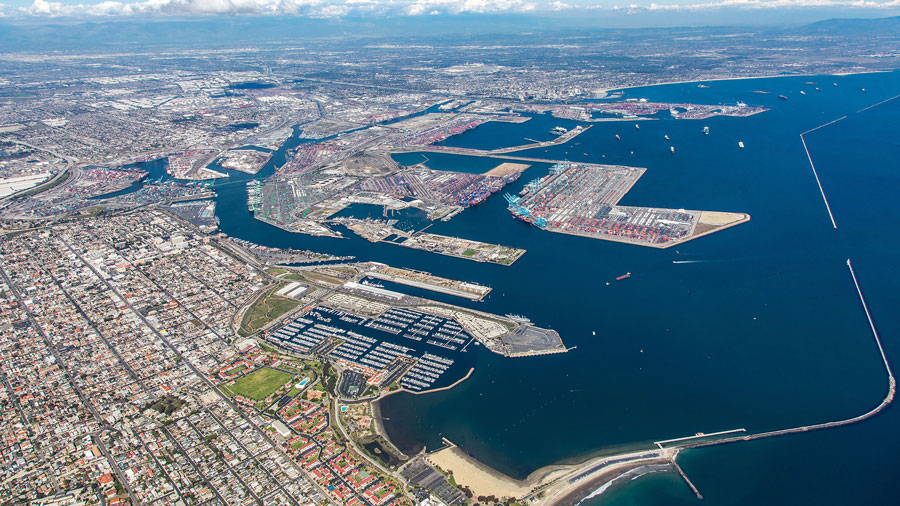
Fishing has remained one of San Pedro’s most important sectors both economically and culturally, although the fisheries on which it has been most dependent have shifted over time. California’s tuna industry began in the port, and San Pedro had a profitable canning industry for many years. The collapse of sardines in the 1960s and the loss of the canning sector negatively impacted the local fishing fleet and industry. Currently, important fisheries for the port include market squid, coastal pelagic species, and highly migratory species, primarily yellowfin and skipjack tuna. Although tuna remains a significant species for local fishers, landings have decreased since the mid-2000s as a result of ecological concerns, more restrictive management measures and loss of local processors. Red sea urchin was once an important fishery for the port, however, the fishery bottomed out in the early 2000s after economic conditions in Japan impacted the highly profitable export market.
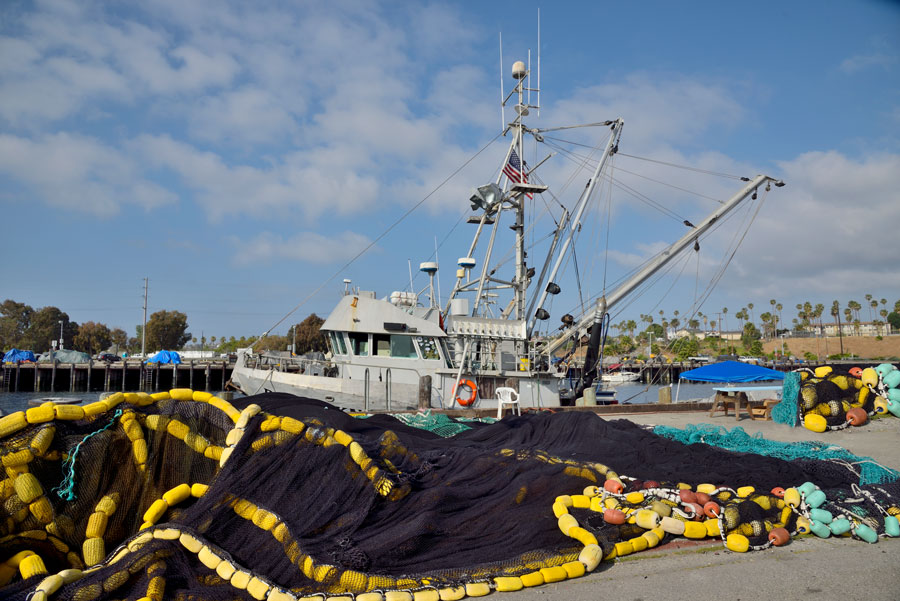
From 2000 to 2021, the number of fish business licenses active in San Pedro decreased from 41 to 27. The number of commercial fishing licenses associated with the port has decreased from 317 in 2000 to 112 in 2021. Currently, market squid is the port’s primary fishery by both weight and ex-vessel value. In 2021, landings at San Pedro Harbor accounted for 14% of California’s total landings and 8% of total value.
By the Numbers
Commercial Fishing (2021)
| Total | Port Rank | Percent of State Total | Primary Fisheries | |
|---|---|---|---|---|
 Weight |
21,211,740 lbs. | 4 of 82 | 14% | Market Squid, Coastal Pelagic Species |
 Value |
$16,360,363 | 5 of 82 | 8% | Market Squid, Coastal Pelagic Species, Highly Migratory Species, Red Sea Urchin |
 Vessels Homeported |
 Fishing Licenses |
 Fishing Businesses |
| 74 of 3,148 | 112 of 6,650 | 27 |
Recreational Fishing (2021)
| Commercial Passenger Fishing Vessel (CPFV) |
State Total | Percent of State Total | Primary Fisheries | |
|---|---|---|---|---|
 Trips |
2,217 | 35,046 | 6.3% | Rockfish, Ocean Whitefish, Scorpionfish |
 Vessels Homeported |
16 | 622 | 3% | |